

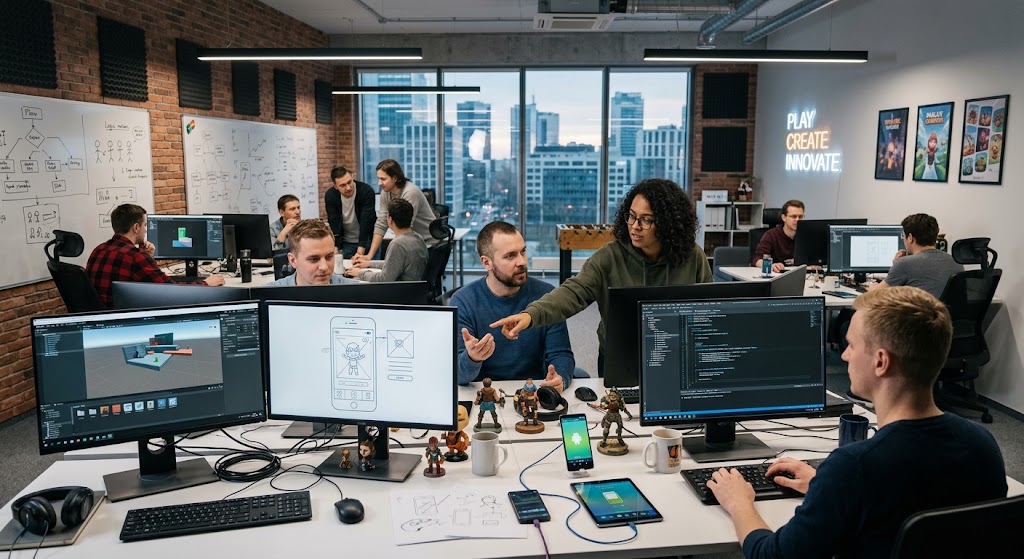
App Game Developers and the Modern Mobile Gaming Industry
Mobile gaming is huge right now. Billions of people carry smartphones everywhere they go, and most of them play games daily. Because of this massive demand, finding skilled app game developers has become a top priority for studios, businesses, and solo creators alike.
Building a successful mobile game takes a lot more than just a neat idea. You need technical talent, creative art design, solid sound effects, and smooth gameplay mechanics. That is where professional studios come into play.
Whether you want to build a simple casual puzzle or a deep multiplayer strategy title, working with experienced engineers makes all the difference. They turn raw concepts into interactive experiences that keep players coming back for more.
Let us take a look at what these specialized teams actually do behind the scenes and how you can pick the right partners for your upcoming project.
What Professional App Game Developers Do Every Day
Creating a mobile title involves many moving parts. Coding is just one piece of the puzzle. App game developers handle everything from initial prototyping to long-term post-launch updates.
First, they establish the core architecture. This means picking the right engine, setting up database structures, and making sure the game runs smoothly across hundreds of different smartphone models.
Next comes UI and UX integration. Players expect intuitive controls, clean menus, and zero lag. If an app feels clunky within the first two minutes, users simply uninstall it and move on to something else.
Then there is network coding. If your game includes online leaderboards, multiplayer matchmaking, or cloud saves, developers must set up reliable backend servers. They also implement security measures to prevent cheating and protect user data.
Finally, continuous performance optimization is essential. App game developers squeeze every bit of efficiency out of phone hardware so the battery does not drain too fast and the device does not overheat during long sessions.
Here is a quick overview of the core roles typically found within a specialized studio:
| Role | Primary Responsibilities | Key Skills Required |
|---|---|---|
| Lead Game Programmer | System architecture, core mechanics, performance optimization | C#, C++, Engine Architecture, Memory Management |
| Mobile UI/UX Specialist | Menu designs, touch controls, player onboarding flows | Figma, Wireframing, Ergonomics, Visual Design |
| Backend Engineer | Server infrastructure, cloud saves, multiplayer networking | Node.js, AWS, Python, Database Management |
| Technical Artist | Shaders, particle effects, asset optimization | Blender, Maya, Shader Graph, Animation |
| QA Test Engineer | Bug hunting, device compatibility, stress testing | Automated Testing, Test Plans, Device Farming |
Building a full team in-house can get expensive very quickly. So many businesses prefer partnering with established studios or specialized external engineering groups to cut overhead while maintaining high quality standards.
Key Technologies Used by App Game Developers
Choosing the right tech stack sets the foundation for your entire project. Different engines cater to different genres, budgets, and target devices.
Most modern app game developers rely on cross-platform frameworks. These tools let programmers write code once and deploy the game to both iOS and Android simultaneously. This approach saves hundreds of hours of work and cuts development costs significantly.
Here are the primary game engines used across the industry today:
- Unity: The dominant choice for 2D and 3D mobile titles. It offers a massive asset store, excellent documentation, and support for almost every platform imaginable.
- Unreal Engine: Best known for high-end, photorealistic 3D graphics. It is heavier on system resources but delivers stunning visual fidelity on modern flagship smartphones.
- Godot: An open-source option gaining rapid popularity. It is lightweight, completely free, and ideal for 2D games or simpler 3D projects.
- Cocos2d-x: A lightweight framework that works great for low-end devices and simple 2D puzzle games with minimal performance overhead.
Selecting the right engine depends entirely on what you want to build. If you need simple mechanics and high compatibility, lightweight frameworks work best. But if you want rich visual worlds, engines like Unity or Unreal are mandatory.
Experienced app game developers evaluate your project requirements early on. They will analyze target hardware, graphics expectations, and planned features to recommend the most cost-effective framework.
Beyond the engine itself, developers utilize various third-party tools for analytics, ad integration, and crash reporting. These tools provide valuable data on how real people play your game, helping you refine gameplay mechanics over time.
Here is how the main mobile development engines compare across key parameters:
| Engine Name | Best For | Learning Curve | License Model |
|---|---|---|---|
| Unity | 2D & 3D Cross-Platform Games | Moderate | Subscription / Royalty tiers |
| Unreal Engine | High-End 3D Visuals & AAA Mobile | Steep | Royalty-based on revenue |
| Godot Engine | Indie 2D Games & Light 3D | Low to Moderate | 100% Free & Open Source |
| Cocos2d-x | Lightweight 2D Games & Casual Apps | Moderate | Open Source (MIT) |
The choice of tech impacts everything down the road. It affects recruitment costs, update frequency, and how smoothly the game scales up when millions of users start downloading it.
Make sure to discuss tech stack preferences with your app game developers before signing any contracts. A bad choice early on can lead to costly rewrites later.
How to Select the Right App Game Developers for Your Project
Not all development teams are created equal. Some specialize in hyper-casual puzzle games, while others build massive multiplayer online role-playing titles. Finding the right fit requires careful vetting.
Start by looking at their past portfolio. Play the games they have actually shipped. Do they feel responsive? Are the menus clean? Are there noticeable performance drops or frequent crashes?
Testing live products tells you far more than looking at marketing presentations. It gives you direct proof of what the studio can deliver under real market conditions.
Here are key factors to consider when evaluating potential partners:
- Proven experience in your specific game genre or artistic style.
- Clear communication channels, regular progress demos, and transparent project tracking.
- Deep understanding of app store compliance, guidelines, and submission policies.
- Solid track record with post-launch maintenance, bug fixing, and feature updates.
- Transparent pricing structures without hidden fees or surprise additions later on.
Do not just focus on raw coding skills. Understanding player psychology, retention mechanics, and monetization strategies is equally critical for commercial success.
Good app game developers act as creative partners. They will challenge poor design ideas and suggest better alternatives that improve player engagement while keeping development costs realistic.
Take time to talk with their former clients if possible. Ask about deadlines, flexibility during feature changes, and how the team handled unexpected technical hurdles during development.
The Typical Development Stages of a Mobile Game
Building a game follows a structured lifecycle. Understanding this flow helps you set realistic expectations and keep the project moving forward on schedule.
It all starts with the pre-production phase. Here, app game developers write the Game Design Document (GDD), build basic grey-box prototypes, and finalize the overall art direction.
Once core mechanics feel fun, full production begins. Artists create 2D sprites or 3D models, programmers write systems, and sound designers record audio assets. Iteration happens constantly during this phase.
Next comes soft launching or beta testing. The team releases the game in select smaller regions to gather real player data, identify balance issues, and fix unexpected bugs under live conditions.
Here is what happens during a standard project timeline:
- Pre-Production: Brainstorming, GDD creation, prototyping, tech stack selection.
- Production: Asset creation, level design, frontend/backend coding, UI implementation.
- Testing & Polish: QA bug hunting, performance optimization, device compatibility checks.
- Launch & Growth: App store deployment, marketing push, live-ops event management, regular content patches.
Skipping steps to meet tight deadlines usually backfires. A rushed release full of technical bugs leads to negative app store reviews that are almost impossible to recover from.
Work closely with your app game developers to build realistic timelines. Leave plenty of extra room for testing and polishing before setting an official public release date.
Remember that launching the game is only the midpoint. Successful mobile titles require ongoing updates, seasonal events, and new content to keep players engaged over months and years.
Skilled app game developers will help you plan this long-term post-launch roadmap right from day one.
Frequently Asked Questions
What Do App Game Developers Do?
They handle the complete process of creating mobile games. This includes writing code, designing user interfaces, integrating art assets, setting up servers, and making sure the game runs smoothly across different mobile devices.
How Much Does It Cost to Hire App Game Developers?
Costs vary widely depending on project scope. A simple 2D game might cost between $10,000 and $30,000. Complex 3D multiplayer titles built by experienced studios can easily exceed $100,000 or more depending on feature requirements.
How Long Does It Take to Develop a Mobile Game?
Timeline depends on complexity. Simple casual games take around 2 to 4 months. Medium-scale titles usually require 6 to 9 months, while complex multiplayer games can take 12 to 18 months of dedicated development.
Which Game Engine Is Best for Mobile Games?
Unity is currently the industry standard due to its flexibility, vast feature set, and strong cross-platform support. Unreal Engine is better for high-end 3D graphics, while Godot is great for lightweight, open-source 2D projects.
Can One Developer Make a Successful Mobile Game Alone?
Yes, solo developers have created massive hits in the past. However, building modern titles usually requires diverse skills like art, coding, audio design, and marketing. Working with a dedicated studio speeds up production significantly and ensures higher polished quality.
How Do Mobile Games Make Money?
Mobile games monetize through several strategies. Common models include in-app purchases for cosmetics or upgrades, rewarded video ads, banner ads, premium upfront purchases, and monthly battle passes or subscription plans.
How Do I Protect My Game Idea When Hiring Developers?
Always sign a Non-Disclosure Agreement (NDA) before sharing sensitive project details. Work with legitimate, registered development companies, and ensure all contract agreements explicitly transfer full ownership of intellectual property and source code to you upon payment.
Building a successful mobile title is a challenging but highly rewarding journey. By choosing experienced app game developers who understand both tech and player retention, you set your project up for long-term commercial success. Take time to plan your vision, pick the right stack, and build something players will truly enjoy playing every day.





Leave a Reply