
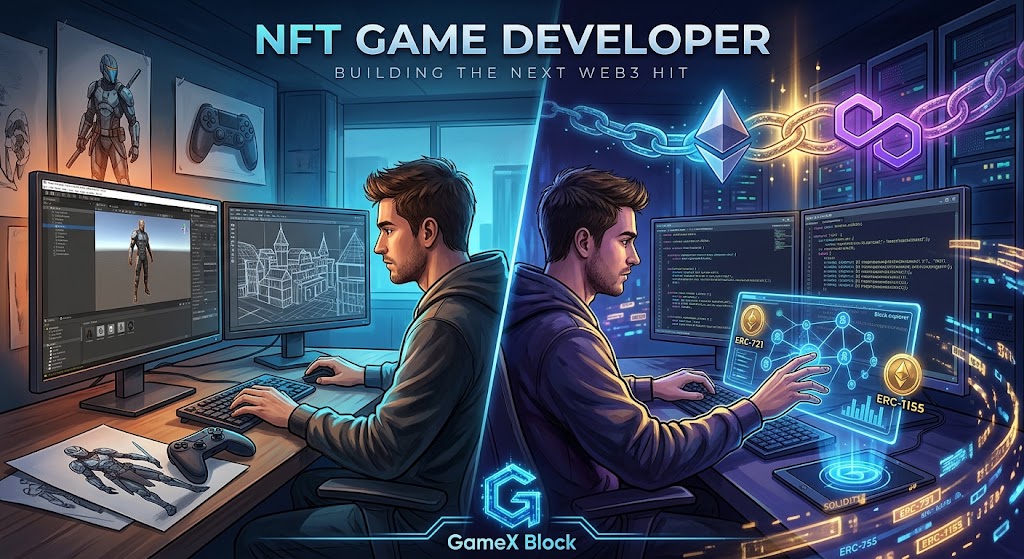
NFT Game Developer Guide to Building Web3 Games
Gaming has changed completely. Players no longer want to pay money for digital items they will never actually own. They want true control over their swords, skins, cars, and virtual land.
That is where an NFT game developer comes into the picture. These specialized creators bridge the gap between traditional gaming fun and blockchain mechanics.
If you want to build a game that stands out today, understanding what an NFT game developer actually does is essential. Let us dive into how these games work, how to build them, and what it takes to succeed in this fast-moving space.
The rise of digital ownership has fundamentally altered player expectations. Ten years ago, spending fifty dollars on an in-game item felt normal, even though the studio owned everything. Now, players expect to trade, sell, or hold their assets indefinitely outside the game boundaries.
An NFT game developer builds the technical bridges that make this possible. They write smart contracts, connect wallet integrations, and design tokenomics that balance entertainment with sustainable economic rewards.
Building a successful web3 title requires a delicate balance. If you focus too much on financial gains, players leave when prices drop. If you ignore the blockchain side, you miss the main appeal of decentralized gaming entirely.
Working with a skilled NFT game developer ensures that both your game design and your technical architecture work together seamlessly.
What Does an NFT Game Developer Do?
An NFT game developer creates digital games that utilize blockchain technology to verify ownership of in-game items. These assets can include characters, cosmetic skins, virtual land, weapons, and special collectibles.
Unlike traditional studio programmers, an NFT game developer works with smart contracts, decentralized storage, and cryptographic wallets alongside standard game engines like Unity or Unreal Engine.
They ensure that every asset minted inside the game can exist on a public blockchain ledger. This allows players to trade items on open marketplaces outside of the main game client.
Here is how a typical development workflow unfolds:
- Designing the core game mechanics and player engagement loops.
- Writing and auditing secure smart contracts on networks like Ethereum, Polygon, or Solana.
- Integrating crypto wallets such as MetaMask, Coinbase Wallet, or Phantom.
- Building front-end interfaces that seamlessly handle Web3 transactions.
- Testing economic models to ensure long-term token stability.
Every decision an NFT game developer makes impacts security and user experience. A bad line of code in a smart contract can lead to lost funds or security breaches, so precision is vital from day one.
Furthermore, an experienced NFT game developer knows how to abstract complex blockchain steps away from casual users. Players should enjoy the game without worrying about gas fees or network switching every single minute.
The goal is always frictionless entertainment paired with true digital ownership.
To understand the skill sets required, look at this breakdown of technical roles in a modern studio:
| Role in Studio | Primary Tech Stack | Core Responsibility |
|---|---|---|
| Smart Contract Engineer | Solidity, Rust, Hardhat, Foundry | Writes, tests, and deploys minting and marketplace logic. |
| Game Engine Programmer | C++, C#, Unity, Unreal Engine | Builds gameplay logic, physics, graphics, and UI interactions. |
| Web3 Integration Lead | Ethers.js, Web3.js, Wagmi, viem | Connects game engine state with wallet transactions and chain data. |
| Backend & Database Architect | Node.js, Python, PostgreSQL, IPFS | Handles metadata indexing, off-chain state, and multiplayer servers. |
Each role must sync perfectly. If the smart contract team works in isolation from the Unity developers, game mechanics will feel sluggish and disconnected.
An adept NFT game developer understands both sides of this coin. They ensure high frame rates on screen while maintaining strict security standards on the blockchain back-end.
Why Hiring a Qualified NFT Game Developer Matters
The web3 space moves faster than traditional tech. Security standards change quickly, new blockchain networks launch constantly, and player expectations evolve by the month.
Hiring a qualified NFT game developer helps you avoid expensive mistakes that could destroy your project’s reputation before launch.
Security remains the highest priority in blockchain development. Unlike standard databases where you can restore a backup after an exploit, blockchain transactions are irreversible. Once funds or tokens leave a smart contract, they are gone forever.
A seasoned NFT game developer brings proven security practices, rigorous code testing protocols, and experience with third-party security audits.
Here are key benefits of working with experienced professionals:
- Prevention of critical smart contract vulnerabilities and exploits.
- Optimized gas consumption, saving players money on transaction fees.
- Scalable backend architecture capable of handling traffic spikes during mint events.
- Proper metadata storage on decentralized networks like IPFS or Arweave.
- Compliance with evolving wallet and token standards like ERC-721 and ERC-1155.
Tokenomics design is another critical area. Many early web3 titles failed because their economies suffered from hyperinflation. Players generated tokens faster than the system could sink them, leading to economic collapse.
A knowledgeable NFT game developer designs balanced sinks and sources. They help structure reward distribution so the economy remains healthily supported over years of active play.
Look at how traditional game production compares directly with blockchain-enabled game production:
| Feature Category | Traditional Game Development | NFT Game Development |
|---|---|---|
| Asset Ownership | Centralized servers owned by studio. | Decentralized blockchain ledgers owned by players. |
| Secondary Trading | Usually banned or restricted to closed systems. | Openly supported across public NFT marketplaces. |
| Data Storage | Private SQL or NoSQL databases. | Hybrid setup: IPFS for assets, chain for state. |
| Update Flexibility | Patches applied anytime directly on server. | Immutable contracts require careful upgrade proxies. |
| Monetization Strategy | Upfront purchase, DLC, or microtransactions. | Mint fees, secondary market royalties, token utility. |
This comparison shows why conventional game developers often struggle when transitioning to web3 without proper guidance. The mindset shift regarding data immutability and user sovereignty is vast.
Choosing an NFT game developer who already understands these nuances saves months of trial and error.
Let us explore the core tech stack used by modern teams. Understanding these tools makes evaluating talent much easier.
- Game Engines: Unity and Unreal Engine 5 lead the industry for web3 integration.
- Blockchain Networks: Ethereum, Polygon, Solana, Immutable X, and Avalanche.
- Decentralized Storage: IPFS, Filecoin, and Arweave for persistent media hosting.
- SDKs and Libraries: Thirdweb, Web3Auth, Moralis, and Chainlink services.
- Smart Contract Languages: Solidity for EVM chains and Rust for Solana.
Building with the right stack ensures high performance and smooth onboarding for mainstream players who may not even know what a wallet address is yet.
This is where account abstraction comes in. Modern NFT game developer workflows heavily feature social logins, gasless transactions, and invisible wallets to make onboarding effortless.
Frequently Asked Questions
What Is an NFT Game Developer?
An NFT game developer is a software engineer or studio specializing in creating video games that incorporate blockchain technology, smart contracts, and non-fungible tokens. They build the systems that allow players to buy, trade, and truly own their digital assets across decentralized networks.
How Do NFT Games Work?
NFT games store in-game assets as unique tokens on a blockchain ledger. When a player earns or buys an item, a smart contract transfers ownership of that token to the player’s personal crypto wallet. The game engine reads the wallet data to render the corresponding character, weapon, or item inside the actual gameplay environment.
How Much Does It Cost to Hire an NFT Game Developer?
The cost varies significantly based on project scope, team location, and technical complexity. Simple Web3 mini-games might range from twenty thousand to fifty thousand dollars, while full-scale AAA multiplayer titles with custom smart contracts and complex tokenomics can exceed hundreds of thousands of dollars.
Which Programming Languages Are Used in NFT Game Development?
Developers use standard game programming languages like C# for Unity and C++ for Unreal Engine. On the blockchain side, Solidity is the primary language for Ethereum and EVM-compatible chains, while Rust is commonly used for Solana and Near networks. JavaScript and TypeScript are widely used for Web3 front-end integration.
What Is the Best Blockchain for NFT Games?
The best blockchain depends on your game’s specific requirements. Polygon and Immutable X offer fast transaction speeds and extremely low gas fees, making them ideal for high-frequency gaming actions. Ethereum provides high security and liquidity, while Solana offers high throughput for fast-paced action games.
Can I Convert an Existing Traditional Game into an NFT Game?
Yes, you can integrate Web3 mechanics into an existing game by connecting its backend to blockchain networks. An experienced NFT game developer can add smart contracts for in-game items, integrate wallet authentication, and convert existing inventory systems into tokenized assets without completely rebuilding the core gameplay engine.
How Long Does It Take to Develop an NFT Game?
Development timelines depend heavily on the project scale. A basic casual game or prototype can take three to six months to complete. However, complex multiplayer games featuring rich graphics, balanced tokenomics, and extensive smart contract ecosystems typically require twelve to twenty-four months of dedicated development time.
Building a successful web3 gaming project requires clear strategy, robust security, and deep industry knowledge. By partnering with an experienced NFT game developer, you ensure your vision comes to life with solid code, engaging gameplay, and sustainable economic architecture. Take the time to evaluate your tech stack, plan your tokenomics carefully, and build a game that players will love for years to come.


Leave a Reply